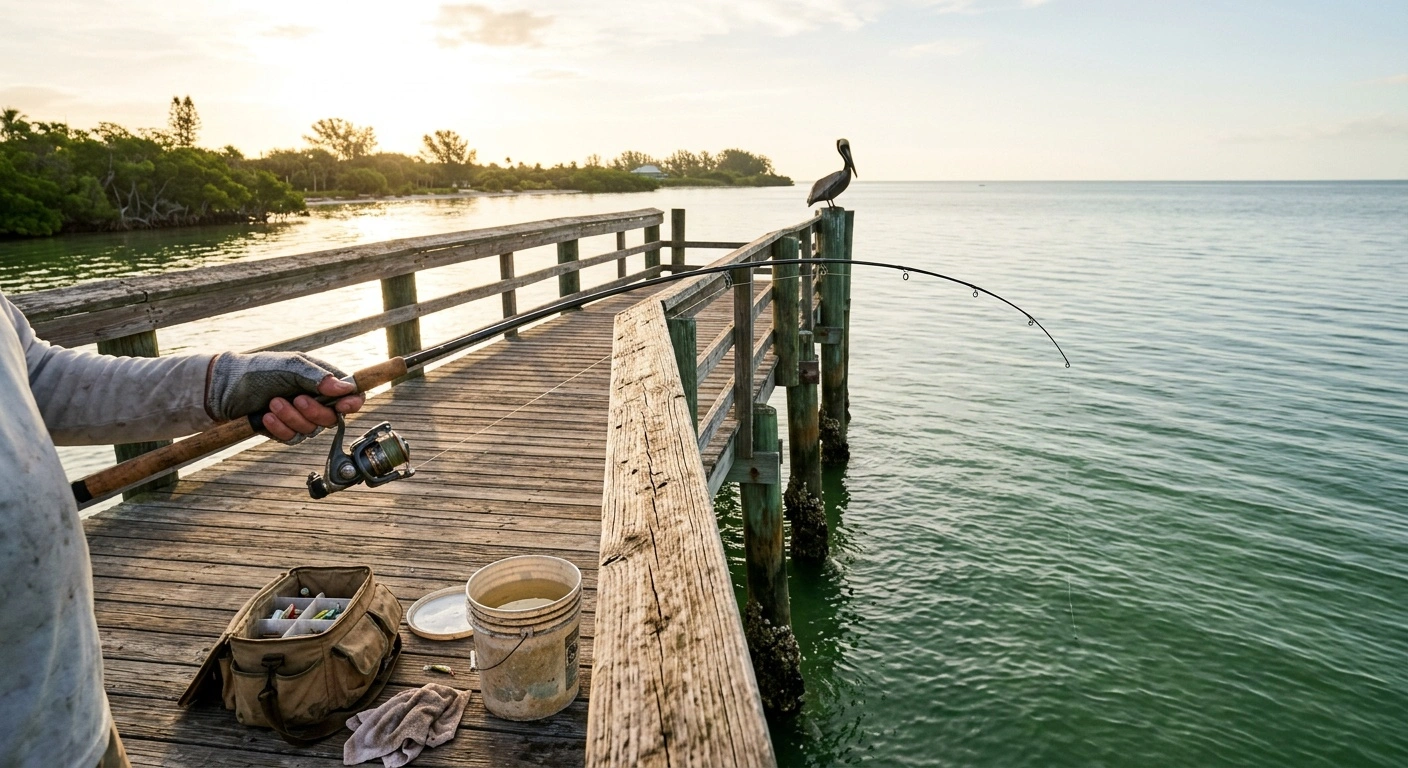
These Anna Maria Island pier fishing tips begin with one local rule: confirm your chosen pier is open before packing bait. Storm damage, repairs, restaurant operations, and municipal projects can change access with little notice. Closures occur most often during hurricane season, which runs from June 1 through November 30. Check current notices on the morning of your trip.
The island’s main piers extend over bay water, which usually stays calmer than the open Gulf. However, current can move quickly around pilings, bridges, and nearby passes. Anglers commonly encounter sheepshead, mangrove snapper, snook, jacks, ladyfish, and Spanish mackerel. The season, tide, and water conditions determine which fish show up.
Pier fishing requires little specialized equipment. One medium spinning outfit, a compact tackle bag, pliers, bait, and a bucket can cover a first trip. Parking and productive rail space may be limited, though. Arrive early, keep your setup contained, and adjust your plan as the tide changes.
Anna Maria Island Pier Fishing Tips for Choosing a Spot
Anna Maria Island has three familiar pier areas. They include Anna Maria City Pier, the Rod & Reel Pier area, and Historic Bridge Street Pier. All three face protected bay water rather than the open Gulf. Each location has different current, structure, parking, and access conditions.
Anna Maria City Pier reaches into Tampa Bay from the end of Pine Avenue. The Rod & Reel Pier sits near deeper moving water at the island’s northern end. Farther south, Historic Bridge Street Pier extends into the Sarasota Bay and Intracoastal Waterway side of Bradenton Beach.
Do not assume any pier is open. Rebuilding, inspections, storm damage, or property operations can restrict access. Check notices from the City of Anna Maria, the City of Bradenton Beach, or the property operator before leaving.
| Pier area | Location | Why anglers choose it | Main drawback |
|---|---|---|---|
| Anna Maria City Pier | End of Pine Avenue in the City of Anna Maria | Open Tampa Bay water, pilings, bottom fishing, and casting room | Parking and rail space become tight during busy periods |
| Rod & Reel Pier area | Bay Boulevard near the north end of Anna Maria Island | Moving Tampa Bay water and structure near the northern tip | Limited parking and access that depends on current property operations |
| Historic Bridge Street Pier | East end of Bridge Street in Bradenton Beach | Current, bridge structure, and access to the Bridge Street district | Boat traffic, snags, and possible construction or storm closures |
Anna Maria City Pier
When fishing access is open, Anna Maria City Pier offers a straightforward layout for first-time visitors. Walk east from Pine Avenue and pause before choosing a rail position. Look for baitfish, diving birds, current seams, or anglers catching fish. Give other anglers enough room to work their lines.
The pilings may hold sheepshead and mangrove snapper. Open water can produce jacks, ladyfish, mackerel, and other roaming species. Live shrimp near the bottom provides a practical starting bait. Pinfish and other bait stealers will also find it quickly.
Parking around Pine Avenue and nearby streets follows posted local rules. Read every sign instead of copying another driver. Spaces fill quickly on pleasant weekends, during winter high season, and around mealtimes.
The free island trolley may save time if you are staying elsewhere on Anna Maria Island. Restrooms and other pier amenities can change during repairs. Confirm available facilities before relying on them.
Rod & Reel Pier Area
The Rod & Reel Pier sits near the north end of the City of Anna Maria. Tampa Bay water moves past this part of the island with noticeable force. When the property allows fishing access, anglers can work structure beside relatively deep water.
A shrimp or small baitfish lowered beside a piling often works better than a long cast. Keep enough drag pressure to turn a fish quickly. A snook or large sheepshead needs only a moment to wrap line around the structure.
Parking presents the main challenge. Do not assume the small nearby lot provides general angler parking. Confirm current rules, use legal public spaces, and keep residential driveways clear.
During winter and spring, consider taking the trolley and walking the final section. Keep rods, coolers, carts, and cast nets away from shared walkways. A compact setup makes fishing safer for everyone.
Historic Bridge Street Pier
Historic Bridge Street Pier stands at the eastern end of the Bridge Street district in Bradenton Beach. Current flows through nearby channels and around bridge structure. Pilings, docks, and passing bait give fish several places to hold.
A bottom rig may catch snapper, sheepshead, catfish, and other structure-oriented species. Small spoons and jigs can reach jacks, ladyfish, or mackerel in open water. Boat wakes can slide an unsecured rod across the deck. Hold the rod or use a secure attachment that leaves the walkway clear.
Bridge Street has several public parking arrangements. Shoppers, diners, and beach visitors often claim the closest spaces. Follow current signs and payment instructions instead of relying on an old parking map.
Early morning usually offers easier parking than late afternoon or evening. Winter high season brings the heaviest demand. If barriers close the pier, choose a legal public shoreline or return another day.
When to Fish the Island Piers
Early morning provides the most comfortable conditions for an Anna Maria Island pier trip. The sun sits lower, parking is easier, and baitfish often move before boat traffic increases. The final hours before sunset can also produce fish. However, pedestrian and vehicle traffic usually becomes heavier then.
Winter midday trips can remain comfortable. Summer heat and reflected glare become tiring much faster. Bring more water than you expect to drink, even for a short session.
Moving water usually matters more than the exact high or low tide. Current carries shrimp and baitfish past pilings, where predators can feed with less effort. A slack tide may slow the action.
Strong current does not always improve fishing. A light sinker may never reach the bottom, while a hooked fish can sweep through neighboring lines. Check a local tide forecast and fish before or after the tide change. Avoid planning the whole trip around slack water.
- Location: Bay-side piers in the City of Anna Maria and Bradenton Beach, subject to current access conditions.
- Best time: Around sunrise on a moving tide, especially on a weekday outside holiday periods.
- Useful tactic: Watch the current before choosing a sinker. Use the lightest weight that holds the strike zone.
Gear for Anna Maria Island Pier Fishing
A medium spinning rod around seven feet long handles most casual pier fishing. Pair it with a reel holding 10- to 20-pound line. Braided main line improves bite detection and pulling power near pilings.
Finish the braid with a clear monofilament or fluorocarbon leader. Barnacles and shells can damage a leader after one fish, so inspect it often. Carry spare leader material and retie at the first sign of abrasion.
A heavier rod helps with large live baits or targeted shark fishing. Most beginners can leave it at home. One manageable outfit causes fewer tangles and keeps the deck clear.
Pack circle hooks, conventional bait hooks, split shot, sliding sinkers, swivels, and several jig heads. Add one or two small spoons or compact plugs. You will also need long-nose pliers, a line cutter, and a dehooking tool.
Bring a measuring device that begins at zero. A landing net helps lift a legal fish without straining the line. Sunscreen, polarized glasses, water, secure shoes, and a hat count as basic safety gear.
Simple Pier Rigs
A sliding sinker rig works well with shrimp or cut bait near the bottom. Slide an egg sinker onto the main line, then tie on a swivel. Add a short leader and a hook sized for the bait and target species.
This rig lets a fish move with the bait without immediately pulling the full sinker weight. Use enough weight to maintain bottom contact. Oversized sinkers wedge into rocks and snag beneath the pier.
A small jig head tipped with shrimp works when fish suspend beside a piling. Lower it slowly and pause at several depths. Keep enough tension to feel a bite as the jig drops.
For mackerel, jacks, and ladyfish, cast a spoon or compact jig into open water. Retrieve it at a brisk pace. Check behind you first, and never make a full overhead cast near pedestrians or birds.
Bait Choices
Live shrimp remains the simplest bait for visiting anglers. Nearly every common pier species will eat it. Hook the shrimp lightly and replace it after it stops moving or loses most of its body.
Frozen shrimp works for bottom fishing but often attracts catfish and small bait stealers. Cut bait can draw larger bottom feeders during a moving tide. Keep all bait cold and contained until use.
Small live baitfish can attract snook, snapper, mackerel, and jacks. They require an aerated bucket or flow-through bait container. Keep the container secure so wakes and foot traffic cannot knock it loose.
Never release unused nonnative bait. Do not leave dead bait, packaging, or loose hooks on the deck. Cast-net and bait-capture rules vary by species, gear, and location.
Check current Florida Fish and Wildlife Conservation Commission rules before collecting bait. Buying shrimp from a local tackle shop saves time. It also lets a visiting angler start fishing with less equipment.
Beginner and Advanced Pier Strategies
A Plan for First-Time Pier Anglers
Start with one rod, live shrimp, and a sliding sinker rig. Choose an open rail section where your line will not cross other anglers. Watch which direction their lines move before dropping yours.
Lower the bait near a piling or make a short underhand cast into open water. Keep the rod in your hand. If the sinker rolls continuously, add a small amount of weight.
Reduce the weight if it buries into the bottom. You can also raise the bait slightly above the structure. Small adjustments often prevent repeated snags.
When a fish bites, reel until the line comes tight before lifting the rod. This technique matters when using a circle hook. Pull the fish away from the piling first, then ease the pressure in open water.
Ask before using a shared net, bucket, or cleaning area. Identify every fish before placing it in a cooler. If you cannot confirm the species and current limit, release it promptly.
Working the Pilings
Experienced anglers can alternate between vertical presentations and open-water casts as the tide changes. Shrimp, crabs, and small baitfish work well beside barnacle-covered pilings. These areas may hold sheepshead, snapper, or snook that ignore baits in open water.
The main challenge is stopping a fish before it circles the structure. Use an abrasion-resistant leader and set the drag before dropping the bait. Control matters more than casting distance here.
During a strong tide, lower the bait slightly up-current. Let it sweep toward the piling without dragging across the wood. Keep the rod tip low enough to manage the line angle.
Avoid resting the line against the pier edge. If fish begin feeding at the surface, switch to a lure that matches the visible bait size. This approach covers several depths without requiring multiple rods.
Fishing Licenses, Seasons, and Pier Rules
Florida requires a saltwater fishing license for most shore and boat anglers. This requirement covers much of the fishing visitors do around Anna Maria Island. Some licensed fishing piers may cover anglers through a facility license, but coverage varies.
Never assume a pier license applies. Florida also offers shoreline licenses and exemptions for certain anglers. Residency, age, fishing method, and location affect the requirement.
Check directly with the Florida Fish and Wildlife Conservation Commission before your trip. Carry the required license while fishing. A digital copy may help, but follow current FWC instructions for proof.
Fish seasons, size limits, bag limits, and temporary closures can change. Gulf and Atlantic regulations may also differ. Use the current FWC rules rather than an old sign, screenshot, or social media post.
Identify each fish before keeping it and measure it correctly. Snook, redfish, spotted seatrout, sheepshead, snapper, and mackerel follow different rules. Release the fish quickly if you cannot confirm its legal status.
Wildlife and Responsible Fish Handling
Pelicans, gulls, herons, dolphins, and manatees regularly visit the island’s bay waters. Never cast toward a dolphin or manatee. Reel in your line if one approaches the fishing area.
Boaters must follow posted manatee protection and no-wake zones. These zones often cover docks, channels, and other confined water. Pier anglers should keep bait and hooked fish away from pelicans.
If you hook a bird, avoid cutting the line while it flies away. Secure the line and prevent the bird from flapping if you can do so safely. Cover its head carefully to reduce stress.
Remove the hook only if you can handle the bird without causing further injury. Otherwise, contact a local wildlife rescue organization. Never leave trailing line attached to a bird.
Use wet hands or a rubberized net when handling fish. Support larger fish horizontally and limit their time out of the water. Place fishing line, hooks, bait packaging, and cigarette butts in proper containers.
Weather, Water Quality, and Pier Safety
Check the wind, radar, and marine forecast before leaving. Land-based anglers still face marine weather hazards. Summer often brings intense heat and afternoon thunderstorms to Anna Maria Island.
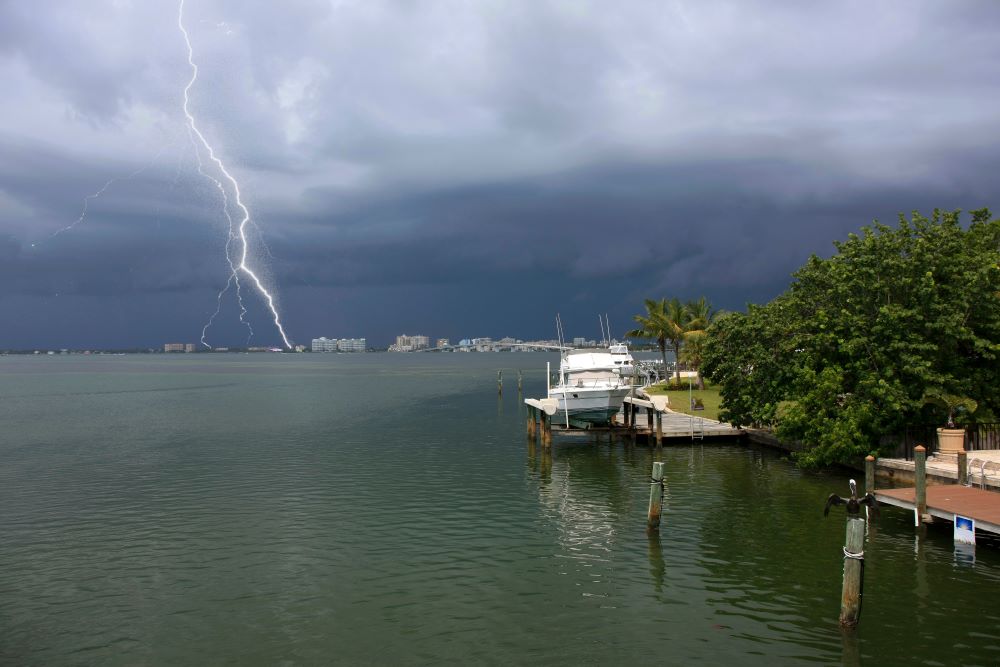
An exposed pier offers little protection from lightning. Leave when you see an approaching storm or hear thunder. Do not wait for rain to begin.
Wind blowing against the tide can create steep chop. It also pushes lines together and makes casting harder. Choose a sheltered location or postpone the trip when conditions become difficult.
Red tide can affect this coast, but the calendar cannot predict it. Review current reports for respiratory irritation, fish kills, and local water conditions. Follow health advisories and avoid areas with dead fish or discolored water.
Sun exposure, dehydration, slick decking, loose hooks, and boat wakes create more routine hazards. Wear secure shoes and keep tackle out of the walkway. Store spare hooks inside a closed tackle box.
Planning a Productive Pier Morning
Pack your tackle the night before and buy bait early. Confirm the pier’s operating status before crossing onto Anna Maria Island. After you arrive, use only clearly legal parking spaces.
Spend several minutes watching the current before rigging. Notice the direction of drifting lines, bait movement, and bird activity. Then choose the lightest sinker that keeps your bait in position.
Fish one promising area carefully instead of moving after every missed bite. Change the bait depth or weight before changing locations. If fish begin chasing bait, switch to a small spoon or jig.
By late morning, traffic usually increases and the sun grows stronger. That point offers a natural time to stop. Collect every piece of line and return undersized or closed-season fish to the water.
Place any legal catch on ice promptly. Even a slow morning can offer close views of Tampa Bay, Sarasota Bay, shorebirds, and passing boats. The changing tide keeps each trip different.
Keep Your Pier Fishing Plan Flexible
The most useful Anna Maria Island pier fishing tips focus on access, timing, and practical adjustments. Verify that the pier is open, arrive before parking fills, and fish a moving tide. Carry only the gear you can control safely.
Start with shrimp near structure. Switch to a lure when predators chase bait in open water. Respect posted closures, current fishing regulations, wildlife zones, and nearby anglers.
Do not force a trip during lightning, red tide, high wind, or storm repairs. Choose a safer location or return on another tide. Better conditions make fishing more comfortable and usually improve line control.






Share This Page