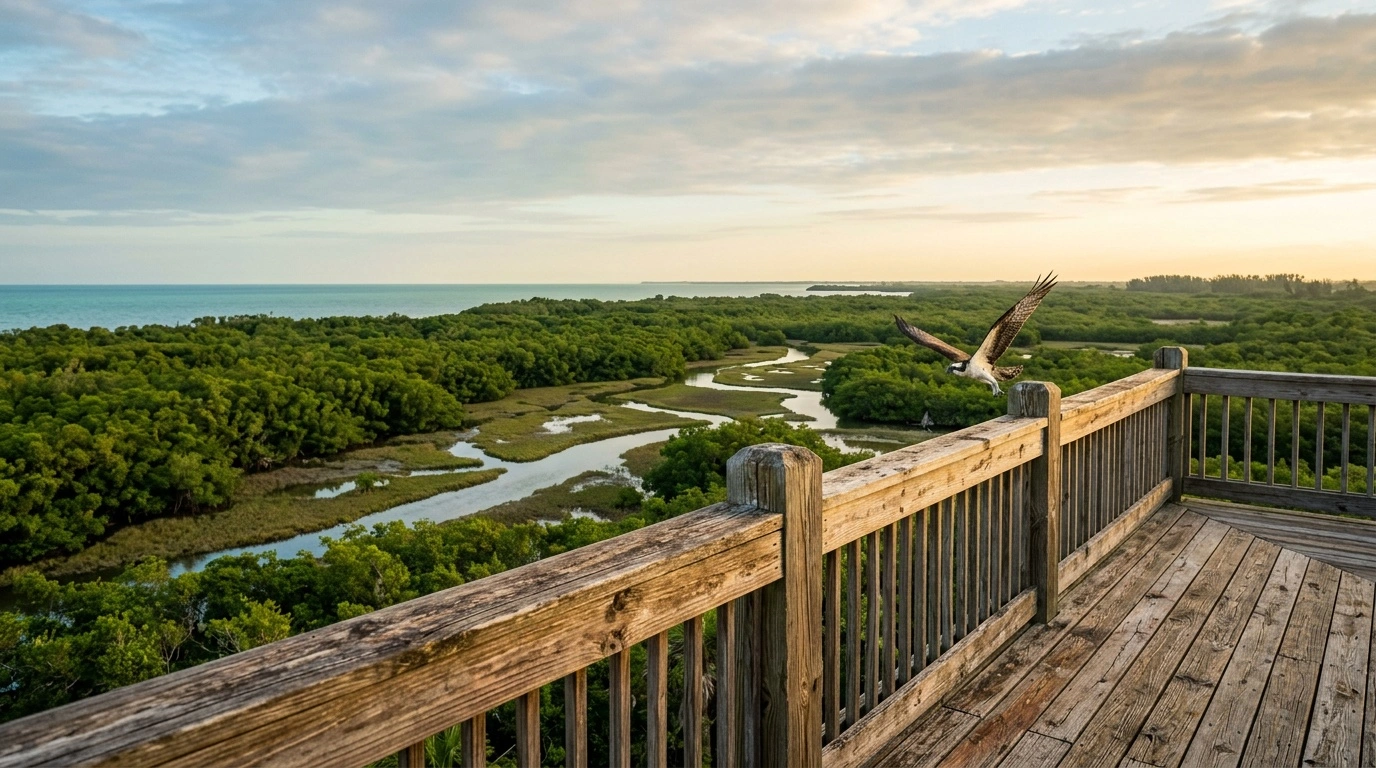
Robinson Preserve tower views stretch across mangrove canopy, shallow bays, salt marsh, and northwest Bradenton’s low coastal horizon. The climb reveals a landscape that feels much larger than it does from the trail. From the upper platform, you can trace waterways toward Tampa Bay. In clear weather, you may also see the Sunshine Skyway.
This is not a Gulf-front overlook with an uninterrupted water horizon. Instead, the tower shows how mangroves, marsh, open water, and upland habitat connect. Ospreys often pass near eye level while herons and egrets feed below. You must reach the tower on foot or by bicycle, so plan to include it in a longer preserve visit.
What Robinson Preserve Tower Views Actually Look Like
The observation tower stands in the original section of Robinson Preserve near Bradenton’s western edge. At ground level, mangroves and coastal vegetation limit many views. The upper platform opens the landscape in every direction.
Look down first. Narrow tidal channels curve through thick mangrove islands and create some of the tower’s most interesting views. Tides and recent weather determine whether open areas show water, mudflats, marsh, or reflective pools.
To the north and west, you can see wider sections of Tampa Bay. Haze often softens the distant shoreline. On a dry, clear morning, the Sunshine Skyway may appear on the horizon. Consider it a bonus rather than a guaranteed sight.
Anna Maria Island and the Gulf lie within the broader coastal landscape to the west. However, the tower does not provide a close beach view or a clear Gulf sunset. It best suits visitors interested in birds, estuary habitat, and coastal geography.
Reaching the Tower From the Main Entrance
Use the main Robinson Preserve entrance on 99th Street Northwest when the observation tower is your priority. Access from the expanded southern section can make the outing considerably longer. From the main parking area, follow the preserve map and marked routes toward the tower.
Several paths and bridges cross the mangrove habitat. You can create different loops, so distance depends on the junctions you choose. There is no single required out-and-back route.
The terrain stays mostly flat, but direct sun can make the route feel longer. Walking works well for a first visit because you can stop at bridges and scan the water. A bicycle helps visitors explore more of the trail network.
Cyclists should slow down near walkers, blind corners, and narrow sections. Storms and maintenance can affect trails or tower access. Check current Manatee County park notices before making a special trip.
Parking, Restrooms, and Basic Access
Robinson Preserve generally offers free parking. The main entrance provides the most convenient spaces for tower visitors. Its lot can fill on cool winter mornings, holidays, and pleasant weekends.
Arriving near opening helps you avoid the busiest period. Early visitors also tend to see more wildlife. If the main lot is full, use only designated parking areas. Do not park on neighborhood roads or soft shoulders.
Restrooms sit near the main visitor area, but the tower has no restroom facilities. Robinson Preserve is not a swimming beach, so it has no beach showers or lifeguard. Carry water instead of expecting to find it along the trail.
Hours, building access, and parking arrangements can change. Confirm current information through Manatee County before an early or late visit.
- Location: Robinson Preserve in northwest Bradenton, Manatee County. Use the 99th Street Northwest entrance for the most direct tower outing.
- Best time: Visit early in the morning from fall through spring for cooler temperatures and active birds.
- Insider tip: After photographing the horizon, look into the channels below. You may spot rays, mullet, or feeding wading birds.
When to Go for the Best Robinson Preserve Tower Views
Early morning offers comfortable temperatures, active wildlife, lighter winds, and easier parking. Low-angle sunlight adds texture to the mangrove canopy. The channels may also reflect the sky before afternoon clouds develop.
Winter and early spring bring pleasant weather, but they also draw more visitors. Arrive early on cool weekends if you want a quieter platform. The stairs can become crowded when groups arrive together.
Late afternoon often brings warm light, though the tower cannot replace a west-facing Gulf beach at sunset. Check the preserve’s closing time before starting. Leave enough daylight to reach the parking area before the gates close.
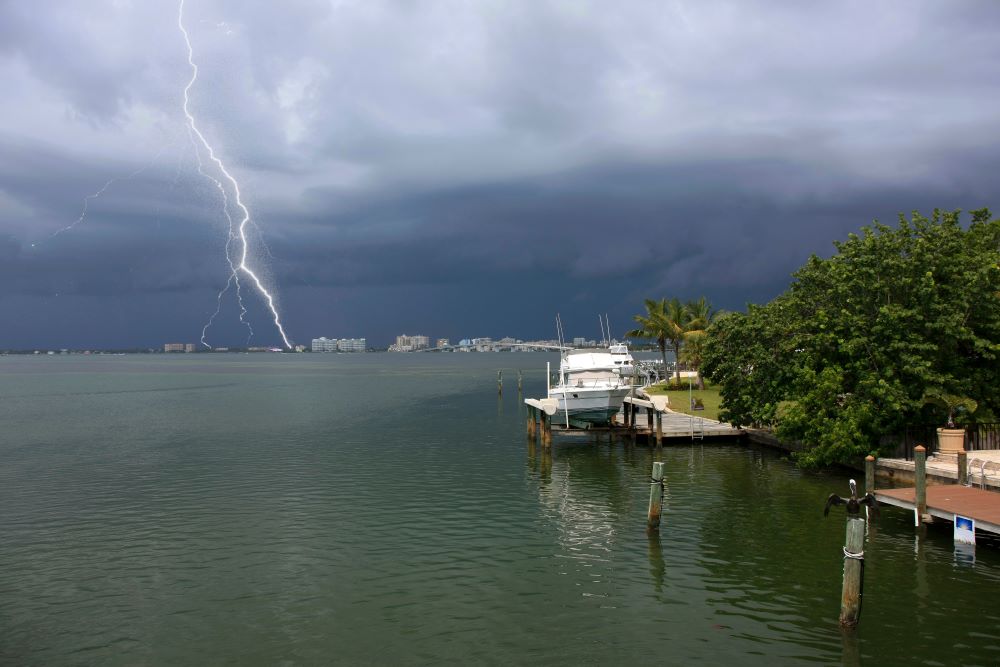
In summer, begin shortly after opening. Heat, humidity, strong sun, and afternoon storms can make the exposed climb uncomfortable. If you hear thunder or see dark clouds approaching, leave the tower immediately.
Birds and Wildlife to Watch From Above
The tower makes it easier to follow birds moving across the mangroves and shallow water. Ospreys rank among the most conspicuous species. You may see them carrying fish, circling overhead, or calling from nearby perches.
Brown pelicans, cormorants, anhingas, herons, egrets, ibis, and roseate spoonbills also use the preserve. Bald eagles sometimes cross the wider coastal area. Wildlife changes with weather, tides, migration, and time of day, so no species is guaranteed.
Scan the channels for mullet breaking the surface or dark shapes moving through shallow water. Dolphins occasionally enter nearby bay waters. Manatees may also use calm coastal channels, though visitors often miss both animals.
Look for gopher tortoises in the preserve’s drier upland areas rather than beneath the tower. Watch from a distance, and never feed them. If wildlife is a priority, bring lightweight binoculars. They provide more value here than bulky camera equipment.
The Climb and Who May Find It Difficult
Reaching the upper platform requires a sustained stair climb. Wind can make the higher sections feel exposed. Take your time, keep to one side, and let faster visitors pass.
Avoid stopping for photographs in narrow sections of the staircase. The top platform has railings, but visitors who dislike heights may prefer lower landings. Ground-level overlooks also provide water and wildlife views.
Do not assume the tower can accommodate every mobility device. Some parts of the broader trail system may prove easier to navigate. Contact Manatee County for current accessibility details before visiting.
The outing can work for school-age children who follow stair rules and stay close to an adult. It is less suitable for children who may climb railings or resist the return walk. Crowded periods require extra supervision.
Swimming is not part of a tower visit. Never enter the tidal channels or treat the preserve like a beach. Dogs may handle the ground-level trails better than the open wooden stairs. Owners should consider heat, wildlife, crowds, and each dog’s comfort level.
Planning a Short Visit or a Longer Loop
A Beginner-Friendly Tower Outing
For a simple first visit, start at the main entrance and choose a direct marked route to the tower. Return along a similar path or follow a short mapped loop. Allow extra time at bridges and open-water viewpoints.
These stops often produce better bird sightings than the tower itself. A shorter route also suits families and visitors carrying camera gear. It makes sense when you arrive after the coolest part of the morning.
A Longer Preserve Exploration
Strong walkers and cyclists can connect the tower with a wider loop through wetland and upland habitat. Expanded sections contain more open terrain and educational features. As a result, a longer route offers more variety than repeated mangrove scenery.
Carry enough water and consult a current map. Small choices at several junctions can add more distance than expected. Keep track of your return time, especially late in the day.
If you also plan to paddle, treat it as a separate activity. Use an authorized launch and carry required flotation devices. Follow posted manatee and no-wake zones, and never land in protected habitat.
Weather, Tides, and Seasonal Conditions
Shade becomes limited after you leave dense vegetation and climb the tower. Carry a hat, sunscreen, and more water than you expect to need. A cool start can quickly turn into a hot return walk.
Summer humidity increases fatigue, while fast-moving thunderstorms create a serious hazard. Do not shelter on the tower during a storm. Return to a safe location as soon as conditions begin to change.
Atlantic hurricane season runs from June 1 through November 30. Tropical weather may cause closures, flooding, debris, or temporary restrictions. These effects vary by storm and may continue after skies clear.
Red tide periodically affects Florida’s Gulf Coast. It can irritate the eyes and respiratory system even when visitors stay out of the water. Sensitive travelers should review current regional reports when red tide has affected nearby areas.
Tides, rainfall, wind, and water clarity change the view throughout the year. Channels may not resemble older photographs or recent social media posts. After severe weather, rely on county notices for trail, bridge, and tower status.
What to Bring and What to Leave Behind
Bring drinking water, sun protection, insect repellent, comfortable shoes, and a preserve map. You can use a printed map or save one to your phone. Cell service should not replace basic route awareness.
Binoculars are the most useful optional item. Many birds remain too far away for a phone camera, even from the upper platform. If you bring a camera, secure it with a wrist or neck strap.
A lightweight long-sleeved shirt offers reliable sun protection in warmer months. Standard walking shoes usually work for a normal tower visit. Most visitors do not need hiking boots, trekking poles, beach chairs, or swimming gear.
Leave drones at home unless current park rules and other restrictions clearly allow their use. Drones can disturb birds in nesting and feeding areas. Pack out bottles, wrappers, and dog waste. Save meals for designated areas, and never hand-feed wildlife.
Getting More From Your Robinson Preserve Visit
To get the most from Robinson Preserve tower views, slow down before and after the climb. The platform supplies the broad perspective, but the trail reveals smaller details. Watch for fiddler crabs, splashing mullet, hovering ospreys, and spoonbills crossing above the mangroves.
Give yourself enough time to stop without watching the clock at every junction. A rushed visit reduces the preserve to a staircase. An unhurried loop shows how the waterways, marsh, and uplands connect.
For a comfortable outing, arrive early and park at the main entrance. Visit the tower before temperatures rise, then explore farther if your water supply and energy allow. Check park alerts, weather forecasts, and regional red tide reports before leaving home.
Respect closures and remain on designated routes to protect mangrove edges and nesting areas. The reward is not a mountain-style summit. It is a clear look at how Bradenton’s protected coastal landscape meets Tampa Bay.









Share This Page