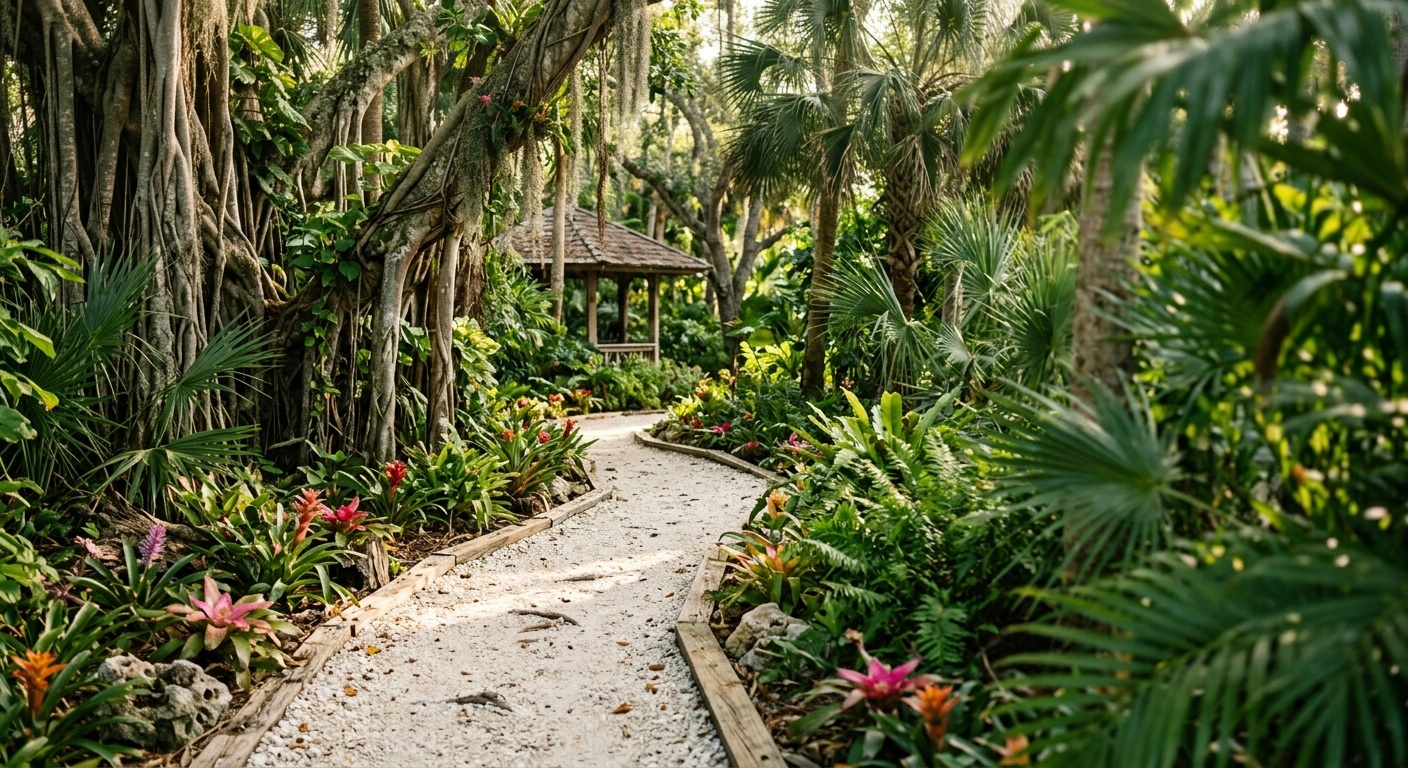
This guide to selby gardens downtown paths covers the main walking areas at the Downtown Sarasota campus. The routes connect tropical plant collections, bayfront scenery, historic buildings, and family spaces. Most visitors can explore them without following a rigid itinerary.
Planning a Walk on Selby Gardens Downtown Paths
Marie Selby Botanical Gardens occupies a 15-acre site beside Sarasota Bay. Its paths include paved walkways, garden trails, and wooden boardwalks. These routes feel more like an urban garden stroll than a backcountry hike.
Pick up a current map near the entrance before setting out. Construction, maintenance, exhibitions, and private events can affect access. Staff members can also point out seasonal blooms or recent changes.
Start With the Tropical Conservatory
The Tropical Conservatory provides a useful introduction to Selby Gardens’ focus on epiphytes. Orchids, bromeliads, and other tropical plants grow across branches, supports, and display structures. The collection changes, so repeat visitors may notice different plants in flower.
Allow time to look above eye level. Many important specimens grow overhead or cling to vertical surfaces. Crowds often move slowly here because the details reward close attention.
Walk Through the Banyan Grove
The Banyan Grove offers shade and a clear view of the trees’ spreading roots. Wide branches create a cooler resting area during hot afternoons. Watch for exposed roots where the walkway meets the lawn.
This section works well as a pause between indoor displays and the waterfront. Benches provide places to rest, sketch, or review the garden map. However, visitors should avoid climbing on the trees or roots.
Follow the Mangrove Bay Walk
The Mangrove Bay Walk runs near Sarasota Bay and highlights a different side of the property. Mangroves frame views of the water while birds and small marine animals move through the shoreline habitat. Conditions vary with the tide and weather.
The boardwalk may feel warmer during the middle of the day. Visit early or late for softer light and cooler temperatures. After rain, walk carefully on damp surfaces.
Explore the Children’s Rainforest Garden
The Ann Goldstein Children’s Rainforest Garden uses raised walkways and interactive features to introduce tropical ecology. Its routes include areas designed for climbing, play, and close observation. Adults should supervise children near steps, bridges, and water features.
Families may spend longer here than expected. Build extra time into the route instead of treating the area as a quick stop. Nearby seating gives adults a place to pause while children explore.
Visit the Historic Buildings
The former Payne Mansion houses the Museum of Botany & the Arts. Exhibitions connect plants with art, science, and botanical history. Check the daily schedule because gallery access can change during installations or special programs.
The historic Selby House also sits within the garden. Together, these buildings add indoor stops to the outdoor route. They provide useful shelter during brief rain showers or periods of intense heat.
Accessibility and Walking Conditions
Many selby gardens downtown paths use firm, level surfaces, but conditions differ by location. Boardwalks, doorway thresholds, roots, and wet pavement may require extra care. Visitors with mobility concerns should ask staff about the most suitable current route.
Wear supportive shoes with reliable grip. Bring sun protection and water, especially from late spring through early fall. Sarasota’s heat and humidity can make a short walk feel more demanding.
Afternoon storms develop quickly during the rainy season. Check the forecast and move indoors when staff announce severe weather. Covered spaces do not protect visitors from lightning.
A Simple Route for First-Time Visitors
Begin near the welcome area and continue to the Tropical Conservatory. Next, cross the central garden spaces toward the Banyan Grove. Follow the waterfront walk before turning toward the children’s garden or museum.
This sequence reduces backtracking, although temporary closures may change the route. Visitors who prefer a slower pace can divide the walk into shorter sections. Benches and indoor exhibits make regular breaks practical.
Set aside at least a few hours if you want to study labels and visit the museum. A faster circuit covers the main areas, but it leaves little time for photography. Plant enthusiasts may want most of a day.
Getting More From Your Garden Walk
Use plant labels to identify species and learn where they grow in the wild. Docent tours and scheduled programs can add context about conservation, horticulture, and research. Confirm availability through the official calendar before visiting.
The selby gardens downtown paths change with plant growth, weather, and ongoing campus work. Consult the current map rather than relying on an older route description. A flexible plan will help you spend more time with the collections that interest you.



















Share This Page